The 10th Symposium on Distributed Ledger Technology (SDLT 2026)


19 - 20 November, Brisbane, Australia

Welcome to the 10th Symposium on Distributed Ledger Technology


Distributed Ledger Technology is an emerging technology, which provides the way to store and manage information in a distributed fashion. It enables the creation of decentralized crypto-currencies, smart contracts, eGovernance, supply chain management, eVoting etc over a network of computer systems without any human intervention. Unprecedented reliability and security over other cryptographic schemes has expanded the application domains of blockchain including financial services, real estate, stock exchange, identity management, supply chain, and Internet of Things.

The goal of this symposium is to provide a forum for researchers, business leaders and policy makers in this area to carefully analyse current systems or propose new solutions creating a scientific background for a solid development of innovative Distributed Ledger Technology (DLT) applications.


Keynote Speakers

Rajat Subhra Chakraborty, Professor, IIT Kharagpur, India


Blockchain for Securing the Silicon Supply Chain: From Traceability to Hardware-Rooted Trust

Abstract. The globalization and fragmentation of semiconductor manufacturing have created significant challenges in establishing trust across the silicon supply chain, exposing integrated circuits to counterfeiting, overproduction, recycling, cloning, tampering, and unauthorized modification. This keynote will examine the emerging role of blockchain as a foundation for establishing verifiable provenance and accountability across the lifecycle of a chip—from design and fabrication through assembly, distribution, deployment, and end-of-life. Building on blockchain-based traceability frameworks and hardware-rooted approaches using physically unclonable functions (PUFs), the talk will explore how immutable distributed ledgers, smart contracts, and unique silicon identities can be combined to connect digital supply-chain records with physical devices. The discussion will further consider emerging challenges in FPGA and heterogeneous/3D-IC supply chains, where multiple manufacturing ecosystems and trust domains must interact. Finally, the keynote will highlight open research questions concerning scalability, privacy, interoperability, data authenticity, and the practical deployment of blockchain-based trust infrastructures for a secure semiconductor supply chain.


Bio. Rajat Subhra Chakraborty is currently the Susanta Kumar Gupta Chair Professor at the Computer Science and Engineering Department of IIT Kharagpur, where he has been working since 2010. He has professional experience of working at Intel (Bangalore, India), National Semiconductor (Bangalore, India) and Advanced Micro Devices (AMD) (Santa Clara, USA). His research interests include Hardware Security, VLSI Design and Design Automation, Digital Content Protection and Digital Image Forensics. He holds 2 Granted U.S. patents, 3 granted Indian patents, and has co-authored 6 books, 10 book chapters, and over 170 publications in international journals and conferences. His work has received close to 9000 citations till date, and has won 2 Best Paper awards. He has received several prestigious national and international recognitions and awards, e.g., IIT Kharagpur Outstanding Faculty Award, IEI Young Engineers Award, IBM Shared University Research (SUR) Award, Royal Academy of Engineering (U.K.) RECI Fellowship and IBM Faculty Award. He is currently an Associate Editor of the Nature Scientific Reports journal; has previously been an Associate Editor of the IEEE TCAD and IEEE TMSCS journals, and regularly serves on the program committee of leading international conferences. Prof. Chakraborty is a Senior Member of IEEE and a Senior Member of ACM. He currently holds the position of Chair of the IEEE Kharagpur Section.
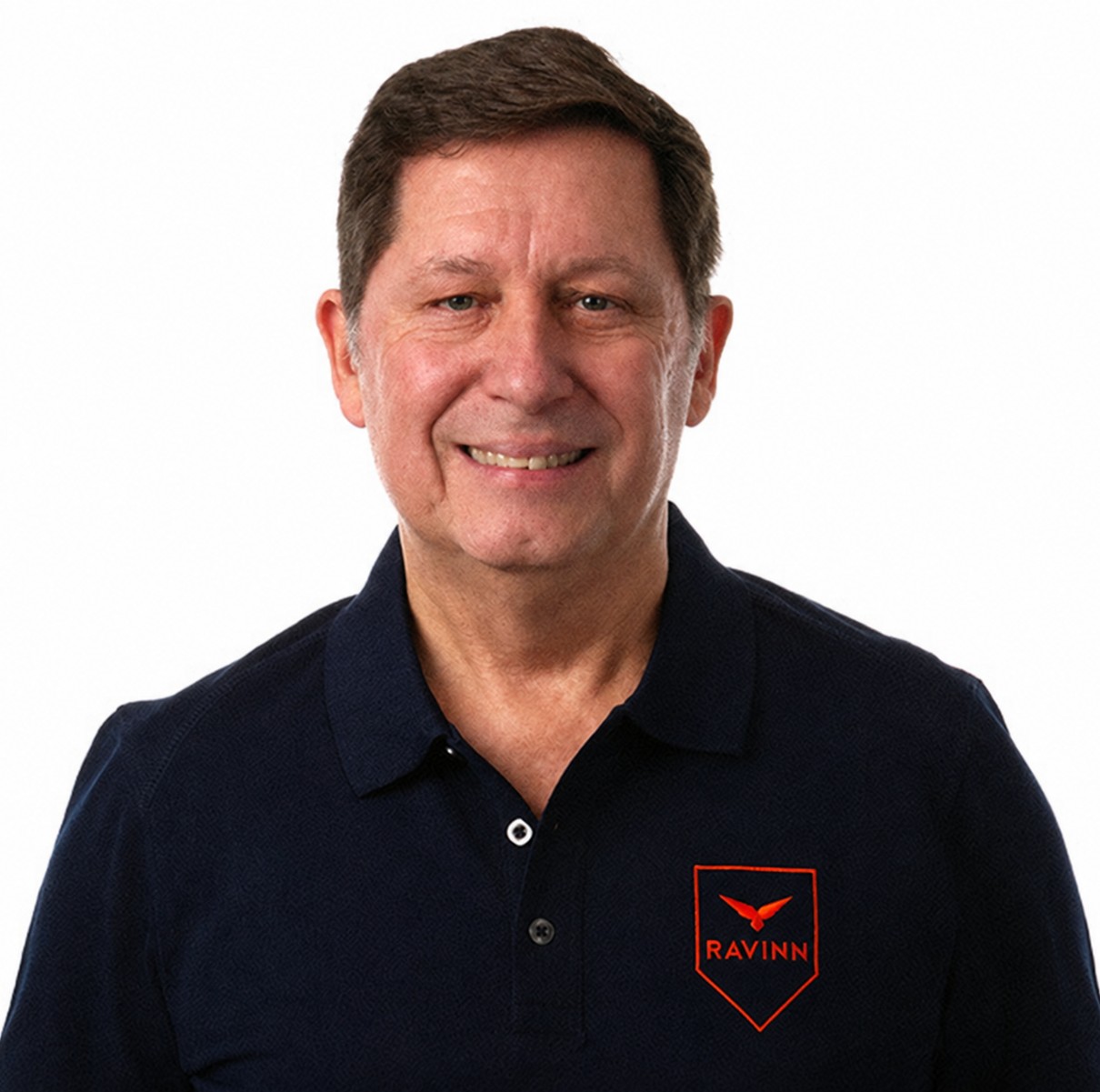


Dennis Desmond, Chief Technology Officer, RAVINN, Australia


Defending the Truth: Distributed Ledgers as an Evidence Layer for AI-Era Cybersecurity

Abstract. As artificial intelligence becomes increasingly embedded in both offensive and defensive cyber operations, a new security problem is emerging: how can defenders trust the integrity of the evidence used to detect, reconstruct and respond to attacks when the systems generating that evidence may themselves be manipulated? Contemporary security architectures rely heavily on telemetry generated by SIEM, SOAR, EDR, IDS/IPS, cloud platforms, identity systems, IoT and operational technology environments. These systems provide the evidentiary basis for automated detection and response, yet they generally operate on the assumption that their logs, alerts, rules and decision records remain trustworthy. This keynote explores the proposition that DLT can provide an independent, tamper-evident evidence layer for AI-era cybersecurity. Rather than replacing existing security technologies, a permissioned distributed ledger could cryptographically anchor selected security events, alert metadata, model decisions, policy states and response actions, creating a distributed record that is substantially more resistant to retrospective manipulation. Such an architecture could preserve provenance, sequencing, integrity and accountability across complex security environments while allowing high-volume operational telemetry to remain in conventional storage. The presentation will examine the technical viability of this approach, including the use of cryptographic hashes, digital signatures, hardware-rooted identity, attestation, consensus mechanisms and off-chain data architectures. It will also address critical limitations, including compromised sensors, false but validly signed telemetry, key compromise, validator trust, privacy, throughput, latency and governance.


Bio. Dr Dennis Desmond is the Chief Technology Officer (CTO) at RAVINN and an Adjunct Senior Industry Fellow at the University of the Sunshine Coast (UniSC). He has more than 25 years of experience in cyber security, cyber intelligence, counterintelligence, digital identity operations, and emerging technologies. Before joining RAVINN, Dr Desmond served in a range of intelligence and security roles, including positions with the U.S. Army, the Federal Bureau of Investigation (FBI), the Defense Intelligence Agency (DIA), and the U.S. Department of Defense. He is recognized for his expertise in cyber threat intelligence, blockchain technologies, cryptocurrency investigations, darknet intelligence, and digital forensics. He has also taught and led university programs in cyber security, digital forensics, artificial intelligence, cryptography, blockchain, and FinTech.


Past Symposiums

1st SDLT (Jun 2017) 2nd SDLT (Jun 2018) 3rd SDLT (Nov 2018) 4th SDLT (Dec 2019) 5th SDLT (Nov 2021)

6th SDLT (Nov 2022) 7th SDLT (Nov 2023) 8th SDLT (Nov 2024) 9th SDLT (Nov 2025)

Registration


Early Bird (until 30 Oct)
General (31 Oct - 10 Nov)
Student 220 AUD 240 AUD
Attendee 280 AUD 330 AUD
Author 380 AUD 430 AUD
Register Here!

Scope and Topics

SDLT-2025 solicits research contributions in all areas pertinent to DLT. In particular, the symposium targets contributions in (but not limited to):

  • Blockchain architectures, protocols, and platforms
  • Consensus mechanisms, scalability, and interoperability
  • Smart contracts and decentralised applications
  • Security, privacy, anonymity, and trust in DLT
  • Formal verification, validation, and secure blockchain engineering
  • Blockchain forensics, fraud detection, and threat intelligence
  • Blockchain applications in healthcare, supply chains, government, law, and society
  • Decentralised finance, cryptocurrencies, stable coins, CBDCs, and digital assets
  • Real-World asset tokenisation and blockchain-based business models
  • Web3, decentralised autonomous organisations, and governance
  • Identity management, self-sovereign identity, and metaverse applications
  • Blockchain, artificial intelligence, big data, and agentic systems
  • Blockchain for IoT, digital twins, and DePIN
  • Sustainable, green, and climate-oriented blockchain solutions
  • Post-Quantum blockchain, ZKPs, and future distributed ledger technologies


Download the CFP


Important Dates


Paper submission Deadline (Firm): 15 September 2026 23 September 2026 (AoE)

Notification of acceptance: 15 October 2026 20 October 2026

Camera Ready Submissions: 30 October 2026

Paper Submissions

Researchers and industry practitioners are invited to submit proposals via this LINK.


Authors are advised to prepare their manuscripts in line with the Springer conference format guidelines available here. Due to the double-blind review process, authors should not include their names or affiliations in the paper. Accepted papers will be published in the Springer's CCIS series.

For the Academic Track submit a single column paper within 15 pages excluding references and appendix.

For the Industry Track, submit either a single-column full paper of up to 12 pages or a single-column short paper of 6 pages.

For the Industry Talk, submit an abstract and a brief outline of the talk (will not be published).

Host city

Brisbane, Queensland's capital, is renowned for its warm subtropical climate and vibrant mix of urban and outdoor experiences. The city boasts a lively cultural scene, diverse dining options, and numerous events and festivals. It offers both adventurous activities and tranquil scenic spots, making it an appealing destination for a variety of tastes.

Things to do in Brisbane


Venue & Accommodation

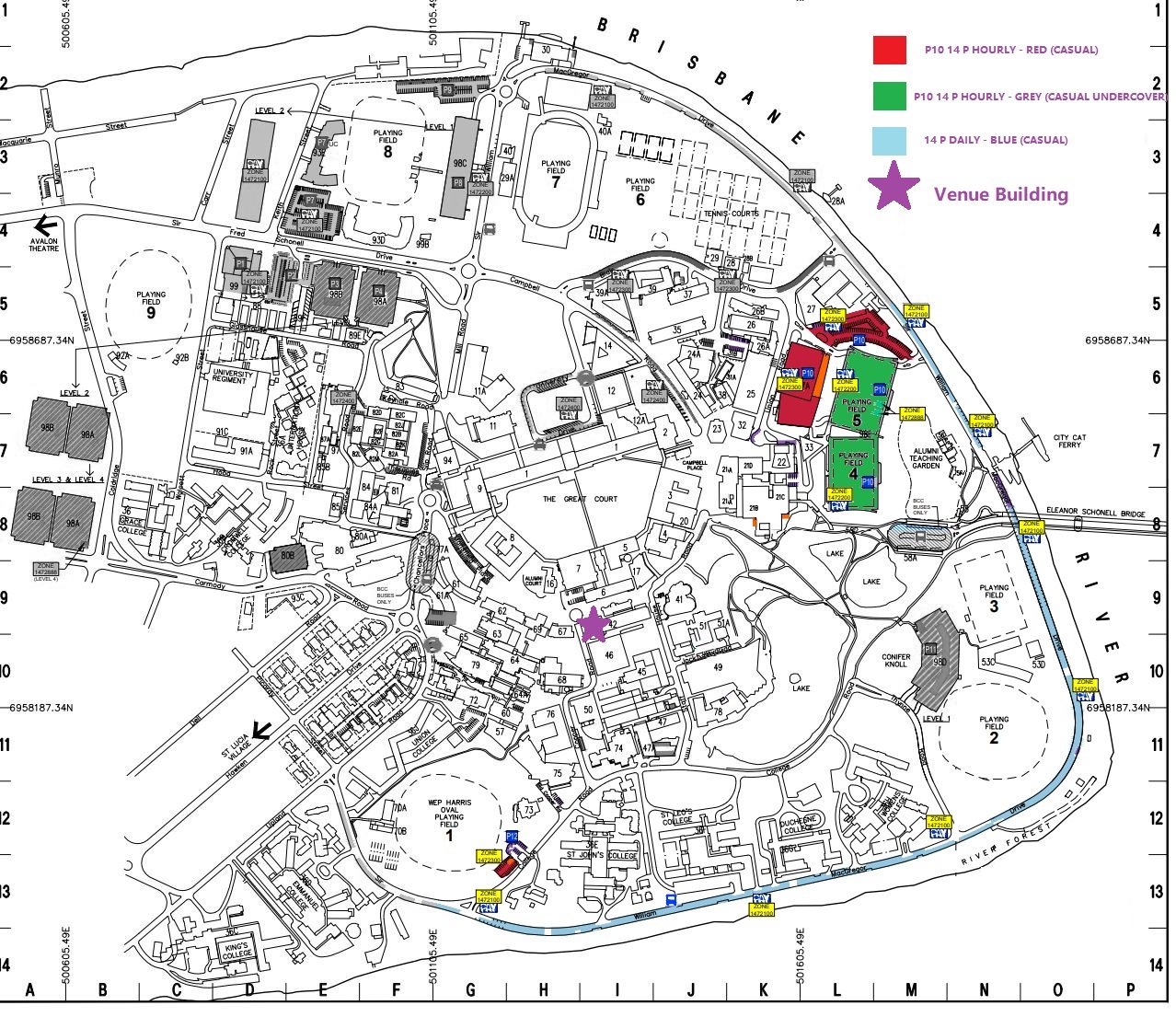
The 10th SDLT will be held at Building 42, Room 216 , University of Queensland, St Lucia, QLD, Australia

Once you arrive at the UQ St Lucia campus, search for "Prentice Building" on Google. Follow the signage to guide you to the correct location.


Public Transport and Parking Recommendations

If you prefer public transport, use Google Maps to find "UQ Lake Station", which is the nearest bus station to the conference venue.

Parking at UQ can be challenging. This guide provides essential information to help you quickly locate the right parking space.

As a visitor, the most common choices are:

Blue Zone (14P Daily): Affordable all-day parking.

Grey Zone (14P Hourly, Capped): Convenient hourly parking with a cap for longer stays

Red Zone (14P Hourly): Ideal for short visits.

Here are specific locations:

Parking Zones Map

a. P10 (Grey and Red Zones): For P10, search "UQ Parking (P10)" on Google Maps. It leads to both Red Zone ($2.5 per hour) and Grey Zone ($2.5 per hour, max $7) parking areas.

b. P12 (Red Zone): For P12, search "UQ Parking (P12)" on Google Maps. It directs you to Red Zone parking ($2.5 per hour).

c. Blue Zone (14P Daily): On Sir William MacGregor Drive, Saint Lucia QLD, roadside parking is available at $5 per day.


Catering Location

Lunch will be provided at St. Leo's College, located within the University of Queensland (UQ) campus. To reach this location, simply search for "St. Leo's College" on Google for accurate directions.

Organising Committee


General Chairs

Salil Kanhere, University of New South Wales, Australia
Priyanka Singh, The University of Queensland, Australia
Shantanu Pal, Deakin University, Australia


Program Chairs

Helen Paik, University of New South Wales, Australia
Xue Li, The University of Queensland, Australia
Volkan Dedeoglu, CSIRO (Data61), Australia


Academic Chairs

Rajat Subhra Chakraborty, Indian Institute of Technology, Kharagpur, India
Pradeep K. Atrey, State University of New York, Albany, USA
Babu Pillai, Higher Colleges of Technology, UAE


Local Chairs

Gagandeep Singh, The University of Queensland, Australia
Zahra Jadidi, Griffith University, Australia


Industry Chairs

Shiping Chen, CSIRO (Data61), Australia
Paul Ashley, Anonyome Labs, Australia


Publicity Chairs

Vishwas Patil, Indian Institute of Technology, Bombay, India
Dora Zelenyanszki, Griffith University, Australia


Web Chairs

Narayan Ranjan Chakrabarty, Australian Catholic University, Australia
Awarjana Perera, Griffith University, Australia


Technical Programme Committee


Abigail Koay, University of the Sunshine Coast, Australia
Babu Pillai, Higher Colleges of Technology, UAE
David Hyland-Wood, Griffith Queensland, Australia
Dileepa Fernando, Nanyang Technological University, Singapore
Dorottya Zelenyanszki, Griffith University, Australia
Ed Young, Crystal Delta, Australia
Ermyas Abebe, ConsenSys, Australia
Guangdong Bai, The University of Queensland, Australia
Gowri Ramachandran, Queensland University of Technology, Australia
Helen Paik, University of New South Wales, Australia
Jubilant Job, Southern Cross University, Australia
Jubilant Kizhakkethottam, Saintgits College of Engineering, India
Joanne Fuller, ConsenSys, Australia
Kamanashis Biswas, Australian Catholic University, Australia
Katrina Donaghy, Civic Ledger, Australia
Kulani Mahadewa, National University of Singapore, Singapore
Marius Portmann, The University of Queensland, Australia
Mark Utting, The University of Queensland, Australia
Md Sadek Ferdous, Imperial College London, UK
Md Whaiduzzaman, Torrens Univeristy, Australia
Mohammad Jabed M. Chowdhury, La Trobe University, Australia
Muhammad Usman, Edge Hill University, UK
Naipeng Dong, The University of Queensland, Australia
Nathan Churchward, Cuscal Limited, Australia
Niaz Chowdhury, CSIRO, Australia
Peter Robinson, Immutable, Australia
Qiang Tang, University of Sydney, Australia
Raja Jurdak, Queensland Univeristy of Technology, Australia
Ranju Mandal, Torrens University, Australia
RK Shyamasundar, IIT-Bombay, India
Salil Kanhere, University of New South Wales, Australia
Samantha Tharani Jeyakumar, Griffith University, Australia
Sandra Johnson, ConsenSys, Australia
Shantanu Pal, Deakin University, Australia
Shiping Chen, Data61-CSIRO, Australia
Son Hoang, RMIT University, Australia
Shoufeng Cao, The University of Queensland, Australia
Sujit Biswas, City Univeersity of London, UK
Thanh-Hai Tran, ConsenSys, Australia
Vallipuram Muthukkumarasamy, Griffith Univeristy, Australia
Vishwas Patil, IIT-Bombay, India
Warwick Powell, Queensland University of Technology, Australia
Xin-Wen Wu, University of Mary Washington, USA
Yinxing Xue, University of Science and Technology of China, China
Zaidul Karim, CSIRO, Australia
Zhe Hou, Griffith University, Australia


Supporting partners


The Univeristy of Queensland

Deakin University